

A new project supported by the Canada Fund for Local Initiatives will help strengthen environmentally responsible UXO clearance across Laos.
As the world's most heavily bombed country per capita, Laos continues to live with the legacy of decades-old unexploded ordnance (UXO) contamination. At the same time, the country is facing growing environmental and climate challenges, including changing rainfall patterns, flooding, soil degradation, and pressure on forests and natural resources. For rural communities whose livelihoods depend on agriculture, these challenges are deeply interconnected. Safe access to land remains essential, but so too is protecting the natural resources that sustain livelihoods and strengthen resilience to a changing climate.
With support from the Canadian Embassy in Laos through the Canada Fund for Local Initiatives, MAG is launching a new project to strengthen environmentally responsible and climate-aware mine action in Laos.
The project comes at an important moment for the country. The World Bank's 2026 Country Climate and Development Report highlights that Laos faces interconnected climate and development challenges that could increasingly reinforce one another. The report identifies the need for targeted adaptation measures and a more sustainable development path that protects forests, strengthens water management, supports climate-resilient agriculture, and reduces vulnerability to climate risks. These priorities are particularly relevant in UXO-affected rural areas, where communities rely heavily on productive land and healthy ecosystems for their wellbeing and economic security.
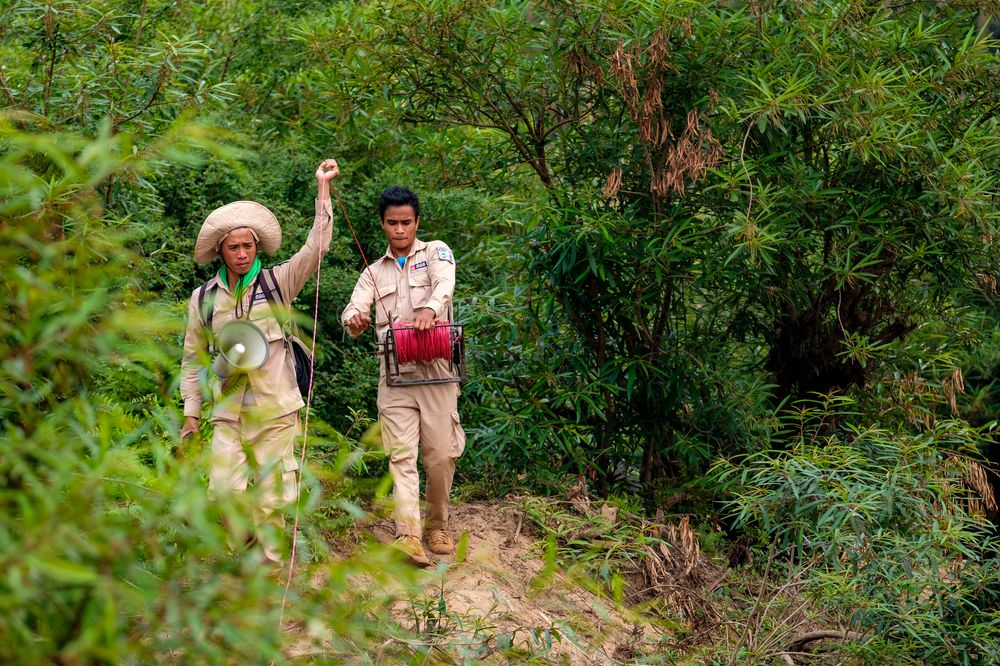
The mine action sector has an important role to play in supporting these wider development objectives. Laos has recently introduced new environmental requirements into its National Mine Action Standards, recognising that clearance activities should not only make land safe, but also minimise environmental harm and contribute to sustainable development. However, operators and government stakeholders still require practical guidance and shared approaches to implement these new requirements consistently.
Through the project, MAG will work with the National Regulatory Authority for UXO/Mine Action, fellow UXO operators, and environmental stakeholders to strengthen understanding of how environmental and climate considerations can be integrated into mine action. Two national dialogues will bring together participants from across the sector to share experiences, identify good practices, and develop practical recommendations for greener approaches to clearance and land release.
A central focus of the project is building staff capacity. MAG will deliver environmental training to approximately 240 staff across its operations in Xieng Khouang, Khammouane, and Vientiane. The training will strengthen understanding of how environmental protection and climate resilience intersect with mine action and equip staff with practical knowledge to identify, manage, and mitigate environmental risks in their daily work.
By strengthening environmental awareness and improving planning practices, the project aims to ensure that UXO clearance delivers lasting benefits beyond the removal of explosive hazards. Protecting natural resources during clearance can help safeguard agricultural land, support biodiversity, and strengthen the resilience of communities facing environmental and climatic change.
Through dialogue, training, and shared learning, the project will help build the knowledge and capacity needed to implement Laos' evolving standards and support a more coordinated approach to environmental management across the mine action sector. Ultimately, it seeks to demonstrate how mine action can make land safe while also protecting ecosystems and supporting sustainable development.


